Bed Bug advice
Bed bug advice – this article takes a look at how to identify a bed bug infestation, how they are transmitted and some general advice on what to do to prevent a bed bug infestation.
What do bed bugs look like?
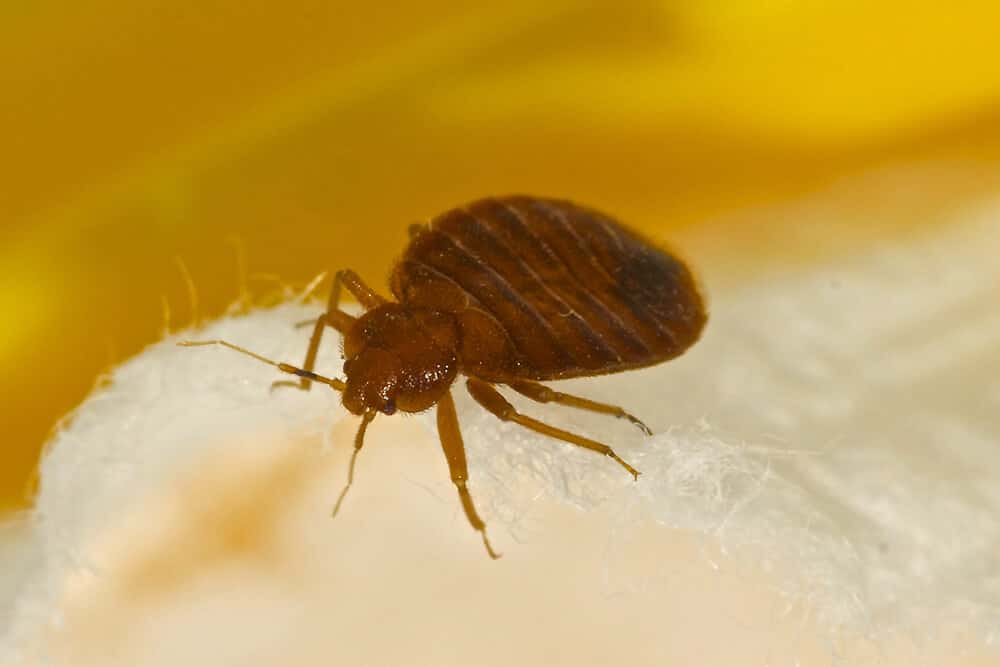
 Bed bugs ( Cimex lectularius) are small parasitic insects that obtain nutrition by feeding on blood. Bed bug adults are about 6mm long (about the size of a lentil), they are red-brown in colour (this changes to a deeper mahogany colour if recently fed) and they have six legs. They are very flattened in appearance but this changes to an oval shape when recently fed. They do not have wings and are thus reliant on their hosts to spread the infestation
How do I know when I have a bed bug infestation?
The first indication that you may have a bed bug infestation is the appearance of bites on the body. Theses bites are normally grouped together in clusters or can be in lines. They have a red swollen area with a darker red centre and sometimes these can blister. The appearance depends on how the individual reacts to the bite, indeed sometimes individuals do not react at all.
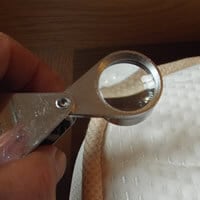 With suspicions raised, the next step is to search for where the bed bugs might be hiding. Bed bugs hone in on our body heat and the carbon dioxide exhaled in our breath, and generally like to remain as close as possible to their food source (US)! With this in mind the bed should be the first place to investigate. The mattress, bed head and bed base need to be closely inspected as bed bugs will squeeze into the tiniest of gaps. The buttons on the mattress, the beading on the mattress, the attachments of the bed head, the bed frame, the feet etc. all offer harbourage sites for these parasitic insects.
As bed bugs have an incomplete metamorphosis, in that they grow from egg to adult in a series of moults. There are various stages of the life cycle that can be found when inspecting the bed. The adults will be the largest and will vary in colour and shape depending on when they last fed. There may be smaller bed bugs called nymphs that are smaller versions of the adults. There may be eggs which are only 1mm long and shed skins, which have a yellow white appearance. There may be spotting which is bed bug excrement and appears as dark spots. There may be blood smears where the bugs have been squashed. Of course, the level of infestation will dictate how obvious the signs are to find. A new infestation will be much harder to determine than a well established one. As the infestation develops the bed bugs will expand out from the bed and can be found under carpets, in bedside tables, behind light switches. In fact almost anywhere that offers harbourage close to their host.
How did I get bed bugs in my home?
Contrary to popular belief, bed bugs are not exclusively found in dirty and unsanitary conditions. As long as they have a host and places to hide away by day, they will infest the cleanest of houses. In modern society we are well travelled and stay in various locations while on business or on holiday. These hotels, B&Bs, hostels, holiday apartments have a high turnover of customers and as such are prone to become infested. As bed bugs can hide away in the smallest of gaps, they can easily be transmitted on our luggage and clothes. When we then unpack at home, which is usually in our bedrooms, the bed bugs have not got far to travel to get to where we sleep.
Bed bugs can also be transmitted on secondhand furniture and antiques which are brought into our homes without a thorough inspection. As bed bugs can survive for up to six months without a blood meal, new occupants in a property can soon find themselves suffering from a surge of bed bugs.
What is the best way to prevent getting bed bugs?
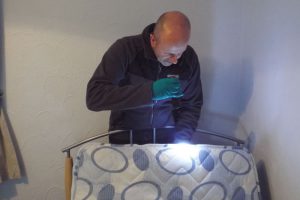 The best way to protect ourselves when travelling is to take a few precautionary measures. These include having a quick check of the mattress whenever we stay in a new room. A quick check around the bed as previously mentioned should suffice. Keep our luggage away from the bed such as on the wardrobe to prevent easy access for bed bugs. Before we leave ensure we give our luggage and clothing a quick check. On arrival back at home, it is advisable not to store our luggage under the bed. When buying second hand furniture always thoroughly inspect it before bringing it in to you home.
Bed bug advice – at Kestrel Pest Management we are specialists in the treatment of bed bugs. If you need our services or just some advice, we would be only too happy to help.