Flea Control Doncaster
This blog looks at flea infestations and the steps that can be taken to ensure a flea free household | Flea Control Doncaster.
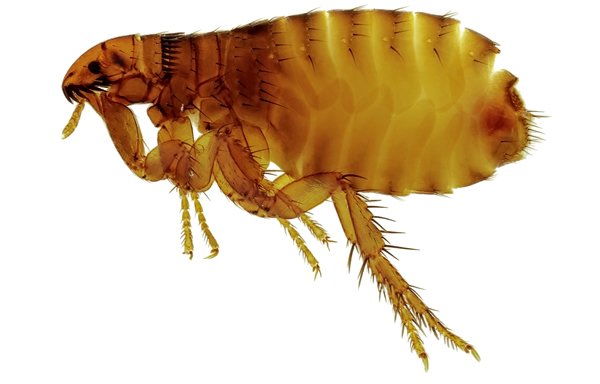
There are a many flea species that parasitise various mammals and birds, but the most common species we encounter, when undertaking treatments, are cat and dog fleas. These fleas prefer to complete their life cycle on and around our pets, however fleas will also readily bite humans to obtain a blood meal and that is where these pests can cause distress to householders.
Flea Life Cycle – Fleas have a complete metamorphic life cycle, as in they have distinct egg, larva, pupa and adult stages. Adult fleas lay their eggs on the host and most of these fall off and concentrate around pet sleeping areas. These eggs hatch in 2 to 3 days and the emerging the larvae begin to feed on flakes on anything composed of animal protein including adult flea droppings which contains undigested blood. The larvae will remain in the vicinity of their host for around 3 weeks before they form a pupal case in which to transform themselves into adults. The length of this stage is dependent on their being a host in the vicinity and can vary between 2 weeks and 6 months. The ability of the flea to remain dormant inside their pupal cases is an evolutionary strategy that enables fleas to survive for long periods without a host. The emergence of the adults from the pupal cases is stimulated by vibration, so when our pets or ourselves our walking around our homes, this is the trigger that stimulates the adult fleas to emerge from their pupal cases and jump on to us or our pets. It’s a little bit like the eggs hatching in the Alien film.
Why Do I Have Fleas In My Home – The major cause of fleas in the home is having pets such as dogs and cats. These pets can pick up fleas from other infested pets and wild animals such as foxes and rodents. Another cause is when homeowners or tenants move into a property that has had a previous untreated flea infestation, which resumes when dormant pupa are stimulated by vibration. Another cause can be people picking up fleas when they visit other properties, which are then transported on their clothes back to their homes. This can also happen when used carpets and upholstered furniture and brought into the home.
How To Identify A Flea Infestation – Often the first sign of an infestation is being bitten especially on the lower leg. The bites are small dark dots surrounded by a reddened area. Our pets will often give a good indication by their increased scratching activity. As the infestation progresses the number of fleas increase and they can often be seen on light coloured clothing and furniture. Sometimes when we attend heavy infestations, multitudes of fleas can be seen jumping as we walk across the floor. The eggs, larvae and pupa can be found but are extremely small and usually secreted in hidden areas so these stages do not normally alert the householder to an infestation.
What Can I Do To Prevent A Flea Infestation
- Ensure that pets are regularly treated with a veterinary flea preparation. Pet flea treatments should be undertaken proactively and not wait until the pet has fleas before they are treated. Flea combs will help to determine if fleas are present.
- Regular washing of pet bedding at a temperature of 50 degrees centigrade or above will ensure all stages of the life cycle are killed.
- Regular hoovering of carpeted areas paying particular attention to carpet edges and between floorboards where debris and detritus will accumulate
What To Do If I Have A Fleas
 We always advise that you should get a professional pest control service to treat a flea infestation as just using over the counter pest control products are unlikely to completely eradicate the flea infestation. We at Kestrel Pest Management offer a professional flea treatment service that will ensure that your homes and businesses are quickly free of fleas.