What To Do About Wasps In Your Loft
What to Do About Wasps in Your Loft – A Guide from Your Local Pest Experts
Wasps in the loft are one of the most common – and unnerving – pest problems we get called out for during the warmer months. Whether you’ve heard a faint buzzing, noticed wasps flying near your roofline, or stumbled across a full-blown nest in your attic, one thing’s for sure: it’s not something to ignore.
Here’s what you need to know – and what you should do – if you’ve got wasps setting up shop overhead.
Step 1. Don’t Panic (and Definitely Don’t Poke)
- If you’ve found a wasp nest in your loft, don’t try to remove it yourself. Wasps are extremely defensive of their nest and will attack in large numbers if they feel threatened.
- DIY methods – from sprays to smoke – often make things worse. Not only are they dangerous, but they rarely deal with the root of the problem.
Step 2: Confirm the Nest
- Before jumping to conclusions, it helps to know what you’re dealing with. Here’s what to look for:
- Increased wasp activity near the roof, particularly around vents or eaves.
- A papery-looking structure, often grey, round, and tucked into a quiet corner of the loft.
- A constant buzzing or humming noise coming from above the ceiling.
If you’re not sure whether it’s a wasp or hornet nest – or even an old one – give us a ring. We’re happy to advise.
Step 3: Call a Professional
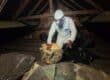
- Professional pest control teams (like us!) use specialist treatments that eliminate wasp colonies quickly and safely, often with no need for you to even go into the loft yourself.
- We wear full protective gear, use industry-approved insecticides, and can remove or destroy the nest completely depending on the situation.
- Most nests can be treated in under an hour, and you’ll usually see activity die down within 24 hours.
Step 4: Prevent Future Nests
Once the nest is dealt with, it’s time to make sure they don’t come back next year.
Here’s how:
- Seal entry points: Gaps around roof tiles, vents, soffits and fascia boards are prime access routes.
- Keep an eye on early activity in spring, when queen wasps are looking for places to start a nest.
- Consider a professional survey each year if you’ve had repeat issues.
Do You Have to Remove an Old Wasp Nest?
No – once abandoned, old nests won’t be reused. However, it’s a good idea to remove them during winter to discourage future queens from nesting nearby. We can help with that, too.
Need Help with Wasps?
If you’ve got wasps in your loft – or think you might – don’t wait. These uninvited guests can grow into aggressive colonies quickly.
At Kestrel Pest Management, we offer fast, affordable wasp nest treatments across Doncaster. We’re fully trained, insured, and happy to give advice even if you’re not sure what you’re dealing with.
Get in touch today for a free quote or same-day callout.