Senses in Rats and Mice
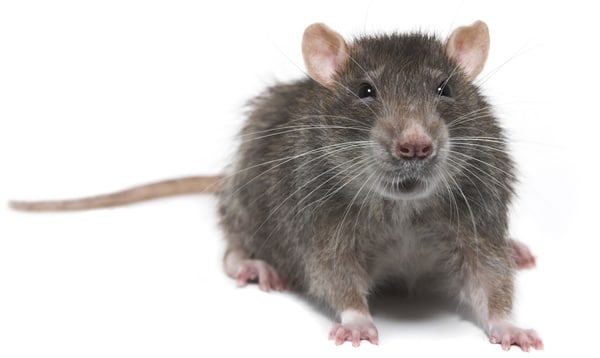
The senses in rats and mice have enabled them to thrive when living in close proximity to people. This article looks at how their senses of sight, hearing, smell. taste and touch make them so successful and such a formidable pest as well as how this knowledge can give us a better understanding when controlling rats and mice.
Sight
 As rats and mice are primarily prey species and are mainly nocturnal, their vision has evolved accordingly. They have quite blurry vision but do have a good light/dark perception which is important when detecting movement from predators. Contrary to popular belief they can see in colour and can distinguish blue and green light but are unable to sense red. They do however have the ability to see ultraviolet light and as rodent urine reflects ultraviolet light, it is thought that this ability is important in communication. They also have the ability to move their eyes independently which allows them to keep one eye on the sky looking for predating birds of prey. While their vision does not possess pinpoint clarity or the vivid perception of colour, it is perfectly adequate for the environment in which they live.
Hearing
 Rats have excellent hearing and can detect sound in the range 200Hz to 90,000Hz (Mice 100Hz to 90,000Hz). As a comparison, humans can hear in the range 20Hz to 20,000Hz. This demonstrates that rats not only have a greater range of hearing but can detect ultrasonic sound (20,000Hz and above). Therefore these rodents hear much more of the environmental noise than we perceive. Rodents also communicate in ultrasonics, which allows them to convey information to potential mates, siblings and colony members. It is also thought that ultrasonics could be used as a means of navigation or prey detection similar to bats using echolocation. With this in mind it is safe to say that rodents have heard us coming a long time before we know they are there.
Smell
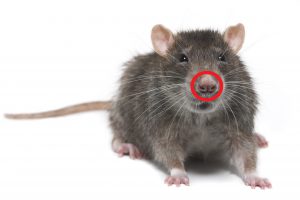 This sense is highly developed in rodents and 1% of their entire DNA is dedicated to olfactory receptors. The olfactory world of rodents must be a very different place to our own, where scents from food, prey and predators constantly bombard them with information. Rodents also have another odour detecting organ called the vomeronasal organ (VNO) situated just off the nasal cavity that is primarily used in sensing pheromones. These are chemical signals that rats and mice deposit in urine, faeces and scent glands which imparts information such as age, sex, maturity, relatedness and it is the VNO that interprets these cues. With such a highly developed sense of smell, it is no wonder that our homes and businesses are so attractive to rodents.
Taste
 Rats and mice are omnivores and as such eat a huge variety of different foods and new potential foods will constantly be encountered. This requires the ability to ensure what they are eating is not toxic, unhealthy or inedible and therefore their sense of taste allows them to identify anything that is not nutritionally beneficial. Rodents can sense all 5 tastes: Sweet, Sour, Salt, Bitter and Umami or savoury taste. Although rats and mice will eat a wide variety of foods, they will also have preferences that can be passed on from their mothers – the diet the mother eats is transferred into the milk that the young feed on.
Touch
 Rats and mice being nocturnal have developed an extremely acute sense of touch that allows them to formulate a detailed map of their environment. The whiskers (vibrissae) of rodents are stiff hairs situated on the muzzle that are constantly moved around to detect movement, texture and vibration. As the rodent moves around its environment, the bending of the vibrissae send messages to the brain which enables them to distinguish objects and obstacles. In fact rodents are much more reliant on their sense of touch than they are on their vision. Rodents also have guard hairs that stand proud of the fur that also send information to the brain in response to touch. Rats and mice have a strong preference to align themselves to vertical surfaces such as wall/floor junctions when they move around their environment. This behaviour called thigmotaxis has probably evolved as a strategy to avoid predators. Another way that rodents map their environment is by means of muscle memory (kinesthesis). This is where routes are learned and remembered through repeated muscle movements and allows a quick escape should the need arise.
It is sometimes easy to assume that other animals perceive the world in the same way that we do. This article is a reminder that rats and mice have phenomenal senses that enable them to flourish in our man made environments. We as a pest control company use this knowledge to devise effective rat and mouse control strategies. Kestrel Pest Management provide an expert rat control and mouse control service that will quickly eradicate any rodent infestation.